

Residential Basement Flooring · NY · NJ · CT
Basement Floor
Coating Services
Upgrade an unfinished or worn basement concrete floor with a decorative coating. Explore epoxy floor finishes for basement recreation rooms, home gyms, storage areas and other interior spaces. Ward Painting can discuss your flooring project and help determine the next steps for your concrete, including important moisture and preparation considerations.
“Many painting projects later, I remain a loyal customer because of the professionalism and great quality of work.”Google Review
Years of Experience
Decades of painting, surface preparation and professional property finishing experience.
Our Company History →Tri-State Service Area
Residential and commercial property services across the New York tri-state region.
Licensing Information →Construction Management
Sean Ward holds a degree in Construction Management from New York University.
Meet Ward Painting →Concrete Floor Coating
Epoxy floor coating is part of Ward Painting's published residential service offering.
Explore Concrete Coatings →Customer Testimonials
Professional Workmanship. Genuine Customer Feedback.
Hear from Ward Painting customers about the team's professionalism, attention to detail and reliability across painting and property projects.
“Sean and his team are total professionals. Even after a very large job, we did not have a ‘punch list’.”
“Their workers were professional and they did everything that they promised. I will use them again and I would recommend them.”
“They are thorough, anticipate problems before they occur, and exceed expectations.”
“They worked diligently to repair the plaster walls and ceiling, put up molding, and apply multiple coats of paint.”
Residential Basement Floor Coating
Turn Bare Basement Concrete Into a Finished Floor.
The floor is a major part of how your basement looks and feels. A finished concrete surface can make the space feel more complete.
Many basements start with an unfinished concrete slab. The floor may be gray, dusty, stained or marked from years of use.
Even when a basement has finished walls, updated lighting or new storage, an unfinished floor can make the room feel incomplete.
Basement floor coatings can create a more decorative, continuous surface over appropriately prepared concrete. The appearance can range from a simple solid-color finish to a more decorative resin floor.
Unlike garages, basements often have below-grade concrete slabs that may experience moisture movement or previous water intrusion.
These conditions can affect which coating systems can be installed successfully. A coating should never be used as a substitute for correcting an active moisture or flooding problem.
Ward Painting offers epoxy floor coating as part of its published services. Contact the team to discuss whether a basement-specific system is available for your floor and conditions.
Benefits of Basement Floor Coating
Why Coat a Basement Concrete Floor?
The right basement coating can improve the appearance and everyday maintenance of a concrete floor, provided the underlying moisture conditions allow it.
A More Finished Space
Upgrade the appearance of an unfinished concrete basement with a decorative floor that complements the rest of the room.
Decorative Color Options
Explore different color and finish options, from uniform coatings to decorative multi-color systems.
Easier Routine Cleaning
A properly installed continuous coating can be easier to sweep and mop than porous, unfinished concrete.
Cover a Worn Appearance
Give stained or discolored concrete a new finished look after addressing surface preparation and repair requirements.
Flexible Room Uses
Explore coatings for certain recreation areas, workshops, home gyms, storage rooms and other interior concrete spaces.
Reduced Exposed Porosity
A compatible resin coating can reduce direct exposure of the concrete surface, but it is not a remedy for groundwater intrusion.
Basement Concrete Floor Finishes
Explore Different Basement Floor Coating Options.
Basement coatings can create different visual effects, but product selection must begin with the concrete and its moisture conditions.

Solid-Color Epoxy Flooring
A solid-color epoxy coating can create a uniform appearance over prepared concrete. The exact products must be compatible with basement conditions.
Explore Epoxy Floor Coatings →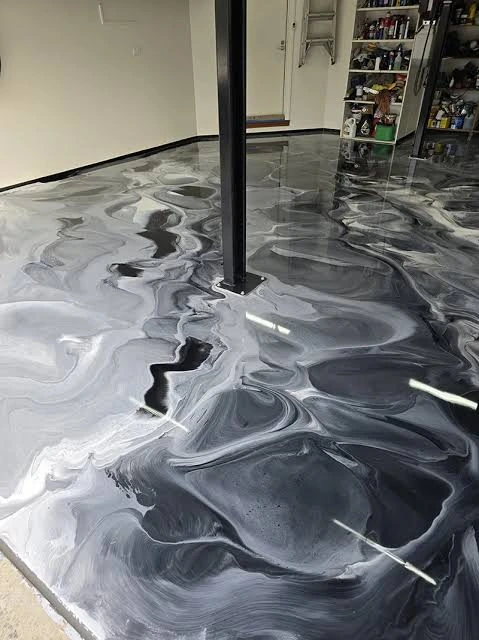
Metallic Epoxy Flooring
Metallic epoxy systems use pigments to create flowing, decorative effects. Consider the gloss, traffic, traction and moisture requirements of the room.
Explore Metallic Epoxy →
Decorative Flake Flooring
Decorative vinyl flakes create a multi-color floor appearance. Different flake sizes, blends and topcoats affect the texture and finish.
Explore Flake Epoxy →Unfinished Basement Concrete Floors
Make an Unfinished Basement Feel More Complete.
An unfinished basement can be useful, but a bare concrete floor often makes the space feel less inviting.
Homeowners often use unfinished basements for seasonal storage, laundry, household equipment, home projects and overflow living space.
Even when the space is organized, a stained or dusty concrete floor can make the basement look older or harder to maintain.
A decorative floor coating can help create a more complete interior appearance without installing a separate tile or plank floor.
Different coating systems offer different colors, sheens and cleaning characteristics.
Not all unfinished basements are good candidates for epoxy. Persistent dampness, condensation, high moisture vapor transmission or periodic water intrusion must be addressed first.
A basement should be assessed based on its actual conditions, not simply because the concrete looks dry on the day of inspection.
- Old, stained concrete basement floors
- Storage and utility areas
- Basements being reorganized or updated
- Decorative coating appearance options
- Existing paint or sealer assessment
- Moisture suitability before installation
Finished Basements & Recreation Rooms
Consider a Decorative Floor for Your Finished Basement.
A basement can be more than a storage area. Many homeowners create recreation rooms, hobby rooms, exercise spaces and other useful areas downstairs.
Flooring plays an important role in the design of these rooms, especially when the floor is visible across a large open-plan space.
Decorative resin coatings offer different appearances from traditional carpet, tile or wood-look products.
A metallic or solid-color coating, for example, can create a distinct look for a modern recreation room or hobby space.
However, a resin floor is generally harder and less insulating underfoot than some traditional interior floor coverings.
Before selecting a finish, consider how the room will be used, desired comfort, cleaning, sound and surface traction requirements.
Any moisture or water intrusion issue must also be evaluated before coating the slab.
- Basement recreation rooms
- Hobby and craft areas
- Selected home gym applications
- Decorative color and gloss preferences
- Comfort and underfoot considerations
- Moisture evaluation and coating compatibility
Basement Concrete Moisture
Moisture Must Be Evaluated Before Coating a Basement Floor.
Below-grade concrete can experience moisture conditions that affect whether a resin coating can be installed.
Because basement slabs are commonly below ground level, their moisture conditions may be different from above-grade floors.
Moisture can enter a basement through water intrusion, seepage, condensation or vapor movement through concrete.
Excessive moisture beneath some resin coatings can contribute to blistering, adhesion failure or other flooring problems.
A basement may appear dry on the surface while still having moisture conditions that exceed a coating manufacturer's stated limits.
Moisture testing and further evaluation may therefore be necessary before selecting a system.
Some coating systems can incorporate specialized moisture mitigation products under specified conditions. These systems have their own limits and installation requirements.
If a basement has active leaks, flooding or ongoing water intrusion, those problems need to be resolved before treating floor coating as a finishing option.
- Previous flooding or water intrusion
- Concrete moisture vapor conditions
- Visible dampness and condensation
- Old coating blisters or peeling
- Moisture testing when required
- Manufacturer moisture limits and system compatibility


Basement Floor Surface Preparation
Proper Concrete Preparation Is Essential for Basement Flooring.
Once the floor's moisture conditions have been evaluated, the concrete still needs to meet the selected system's surface preparation requirements.
Basement concrete may have old paint, coatings, sealers, dust, adhesive residues or damage from previous flooring.
Many epoxy floor systems require mechanical grinding or another specified preparation method to create the correct surface profile.
Certain cracks, holes and surface defects may require repair before coating application.
After preparation, compatible primers, basecoats, decorative layers and topcoats are installed according to the chosen system.
Temperature, humidity, ventilation and curing conditions are particularly important when applying coatings indoors.
Proper ventilation and product-specific application precautions must be observed throughout the project.
- Existing coatings and adhesive residues
- Concrete surface profile requirements
- Cracks and damaged areas
- Approved primers and resin layers
- Ventilation and indoor application conditions
- Product-specific curing and return to use
Choosing Basement Flooring
Epoxy Coating vs. Basement Paint vs. Other Floor Finishes.
Different floor finishing products serve different purposes. Moisture conditions and intended room use should guide the choice.
Epoxy Floor Coating
A resin-based coating system applied to prepared concrete. Product formulations vary in thickness, finish, adhesion and moisture tolerance.
Concrete Floor Paint
Floor paints are generally applied as thinner decorative coatings. Their durability and substrate requirements differ from professional multi-layer resin systems.
Other Basement Flooring
Tile, vinyl and other interior flooring products have different comfort, moisture, installation and maintenance characteristics. Each requires appropriate substrate conditions.
Basement Floor Cleaning & Maintenance
Keep Your Coated Basement Floor Looking Good.
A properly installed basement floor coating may create a more continuous and easily cleaned surface than unfinished concrete.
Routine care typically involves removing dirt and loose debris, then cleaning with products approved for the coating.
Avoid using harsh solvents or abrasive cleaning equipment unless approved by the manufacturer.
For recreation rooms and home gyms, consider how furniture, exercise equipment and other heavy items contact the floor.
Protective pads or appropriate mats may help reduce scratching or localized wear, provided those products are compatible with the coating.
Continue to monitor the basement for unusual dampness, leaks or other moisture-related changes.
A floor coating does not replace proper basement moisture management or maintenance.
- Sweep or remove loose dirt and grit
- Use cleaners approved for the coating
- Avoid unnecessary abrasion and dragging
- Address spills promptly
- Monitor basement moisture conditions
- Follow the installed system's care instructions
Our Approach
Our Basement Floor Coating Process.
Before choosing a basement floor finish, it is important to understand the concrete, moisture conditions and intended use.
Discuss Your Basement
Share your property location, floor size, basement use and the appearance you want.
Review the Concrete
Consider moisture, past water intrusion, old coatings, cracks and surface preparation needs.
Confirm the System
Discuss available basement-compatible materials, finish options and application requirements.
Complete & Review
Complete the agreed work and review curing requirements, cleaning and ongoing care.
Basement & Decorative Floor Finishes
Explore Basement Floor Coatings & Finish Options.
Compare a finished basement floor with other epoxy and decorative resin coating appearances.
Why Ward Painting
Experience, Preparation & Professional Workmanship.
Ward Painting brings decades of painting, surface preparation and property finishing experience to residential and commercial work.
Decades of Experience
Ward Painting's experience includes residential and commercial painting, restoration, surface preparation and specialist finishes.
Attention to Existing Conditions
Basement floor coating requires consideration of concrete condition, moisture and coating system compatibility.
Professional Project Approach
Ward Painting's genuine customer testimonials highlight reliability, quality workmanship and attention to detail on property projects.
Related Concrete Coating Services
Explore More Concrete Floor Coating Options.
Learn about epoxy flooring, decorative metallic coatings and other resin finishes for concrete surfaces.
Explore our full Concrete Coating Services , including Flake Epoxy Coating , Quartz Epoxy Coating , Polyaspartic Floor Coating , Patio & Outdoor Coating and Pool Deck Coating . Ward Painting also offers Interior Painting , Residential Services and Commercial Services .
Our Service Area
Basement Floor Coating Enquiries Across NY, NJ & CT.
Ward Painting serves homeowners and commercial property customers throughout the New York tri-state region.
Our wider service area includes Rockland County, Westchester County and surrounding communities in New York, New Jersey and Connecticut.
Whether you're finishing a basement or updating an existing concrete floor, contact us with your location, floor size and any known moisture issues to discuss the next steps.
Frequently Asked Questions
Basement Floor Coating Questions.
Answers about basement epoxy flooring, moisture, concrete preparation, decorative finishes, curing and cost.
Does Ward Painting offer basement floor coating?
Ward Painting lists epoxy floor coating among its published services. Contact the company to confirm basement-specific coating availability and whether your concrete conditions meet the requirements of an available system.
Can you epoxy a basement concrete floor?
Epoxy may be used on certain basement concrete slabs, provided the surface and moisture conditions meet the requirements of the selected resin flooring system. Basements should be evaluated carefully before installation.
Is epoxy good for unfinished basement floors?
Epoxy can provide a decorative finished surface over appropriate concrete. However, not every unfinished basement is a good candidate. Existing moisture, contamination, damage and old coatings may affect installation.
Does epoxy waterproof a basement floor?
A standard epoxy coating should not be treated as a solution to active leaks, flooding or groundwater intrusion. Waterproofing and moisture mitigation require separate evaluation and appropriate systems.
What happens if moisture comes through the concrete?
Excessive moisture vapor or other moisture-related conditions can cause adhesion problems, blistering and coating failure. The slab may require moisture testing and additional evaluation before a coating can be specified.
Can epoxy be used in a basement that floods?
A basement with an unresolved flooding or water intrusion problem should have that issue corrected before considering decorative flooring. A resin coating cannot be relied upon to prevent future flooding.
Do you need to test basement concrete for moisture?
Moisture testing may be necessary to determine whether the slab meets the manufacturer's substrate requirements. The appropriate testing method and acceptance limits depend on the proposed flooring system.
Does a basement floor need grinding before epoxy?
Many epoxy floor systems require mechanically prepared concrete with a specified surface profile. Grinding, shot blasting or another approved preparation method may be necessary.
Can epoxy cover cracks in a basement floor?
Some cracks and surface defects can be repaired before coating. However, active movement and structural cracks may require further evaluation. A floor coating does not guarantee cracks will never reappear.
Can you apply epoxy over old basement floor paint?
Existing paint or sealers may be incompatible with the selected epoxy system. Removal or special preparation may be necessary to obtain the required adhesion.
Are epoxy basement floors easy to clean?
Properly sealed epoxy flooring can provide a more continuous surface than bare concrete, potentially making routine cleaning easier. Cleaning depends on the finish, texture and selected coating.
Are epoxy basement floors slippery?
Smooth resin floors can be slippery, especially when wet or contaminated. Some coating systems offer texture options. Traction needs should be considered before selecting the finish.
Can epoxy flooring be used in a basement home gym?
Certain epoxy systems may be considered for home gym concrete. Equipment loads, impact, floor protection, traction and comfort should be assessed. Specialized gym flooring or mats may be needed for some activities.
Is metallic epoxy an option for basement floors?
Metallic epoxy may be considered for certain interior concrete floors, provided substrate conditions are appropriate. Its decorative pattern and gloss are different from solid-color epoxy. Learn more about Metallic Epoxy Coating .
Will a coated basement floor feel cold?
Resin coating is generally a relatively thin finish over the existing concrete, so it does not provide the cushioning or thermal insulation of some other flooring products. Underfoot comfort should be considered for living areas.
How long does basement floor coating installation take?
The timeline depends on floor size, concrete repairs, preparation, moisture evaluation, coating layers and curing. Indoor conditions may also affect application and drying requirements.
Is ventilation necessary when coating a basement floor?
Yes. The specified ventilation and safety precautions must be followed for the actual coating materials. Requirements vary by chemistry and product formulation.
When can a basement floor be used after coating?
Return-to-service times depend on the product, application conditions and intended use. Light foot traffic and placement of furniture or heavy equipment may have different waiting periods.
How long does basement epoxy flooring last?
Service life depends on concrete condition, moisture exposure, surface preparation, installation quality, traffic, maintenance and the coating system selected. No single lifespan applies to all basement floor coatings.
How much does basement floor coating cost?
Pricing depends on floor area, concrete condition, moisture evaluation, existing coatings, surface preparation, repairs, product selection and decorative finish. Request a project-specific estimate for pricing.
How do I request a basement floor coating estimate?
Complete the form below with your property location, approximate basement area, current concrete condition, desired finish and any history of water intrusion. You can also call Ward Painting at (845) 639-0062 in New York or (201) 818-9099 in New Jersey.
Request a Free Estimate
Tell Us About Your Basement Floor Coating Project.
Whether you're finishing an unfinished basement, updating an existing concrete floor or exploring decorative epoxy finishes, tell us about your property, approximate floor size, concrete condition, planned use and any known moisture concerns. We'll discuss available coating options and the next steps.